




The Medieval Stained Glass of Herefordshire and Shropshire

|
| The Medieval Stained Glass of Herefordshire and Shropshire, Robert Walker, Logaston Press, 2023, 286 pages, extensively illustrated mostly in colour, paperback. |
The Logaston Press has an excellent catalogue of books on the history, art, architecture, culture and people of the Welsh Marches. Robert Walker’s comprehensive new book on its medieval glass is an addition of considerable value to architectural historians and glass aficionados, as well as the interested amateur.
The history of stained glass in England is clouded with a series of significant problems: the rarity of medieval records, the sketchiness of early recording, 16th- and 17th-century iconoclasm, 18th-century neglect and 19th-century restorations with lost or inadequate records. Neither historic nor modern studies in the Marches have been comprehensive, a matter Walker’s book seeks to redress.
The book is divided into a general description of the subject entitled ‘The history and iconography of the stained glass in the Diocese of Hereford’ (the diocese includes much of Shropshire) and a gazetteer in which the glass of individual churches is described. The history section deals first with the art of glassmaking itself, and then with what little is known of the glaziers and glassmaking sites, and the rather better evidence of the patrons of early glass. In this and the subsequent chronological sections he comments constructively on the work of previous writers on the subject. He draws interesting comparisons from outside the survey area, and includes references to glass that is now located elsewhere.
The period covered by the book is considerably wider than can be construed from the term medieval. Of necessity in a review of the heritage that remains to us, the later history of the glass’s recording, removal and restoration must also be recorded. Hence the text frequently forges into the events of later periods.
The gazetteer is nicely handled, with each location at which medieval glass has been identified being accorded a description proportionate to its scale and importance. The places with more substantial descriptions, such as Abbey Dore, Eaton Bishop, Hereford Cathedral, Ledbury and Ludlow, include considerable cross-referencing and comparisons with other sites within the scope of the book as well as those further away.
The book is lavishly furnished with high-quality illustrations sufficiently detailed to see precisely the points being made in the text. The windows requiring the most detailed explanations are separated into text boxes for easy location and reference. The extent of the research is prodigious, with details of what is known about each window set out with great clarity.
While there is no problem locating all the places covered by the book, its structure is slightly confusing. The book’s title and map suggest that it covers the two modern ceremonial counties, but the preface makes clear that the emphasis is diocesan. The map, on the other hand, has a diocesan boundary on its eastern side and a county boundary on its western one. The parts of Shropshire not in Hereford Diocese are confined to an appendix in which four locations that properly should have been in the main gazetteer are misplaced. But these are minor quibbles about a scholarly and authoritative book.
A reference book rather than a handbook, it is very nicely produced. It should be on the shelves of anyone interested in the cultural heritage of the Marches and must surely have the effect of increasing interest in this previously neglected topic.
This article originally appeared as ‘A window on the Marches’ in the Institute of Historic Building Conservation’s (IHBC’s) Context 177, published in September 2023. It was written by James Caird.
--Institute of Historic Building Conservation
Related articles on Designing Buildings
- Conservation.
- Conserving Canterbury Cathedral's Great South Window.
- Conserving structures in historic designed landscapes.
- Crittall metal windows.
- Environmental protective glazing.
- Glass.
- Glazing.
- Heritage.
- Historic environment.
- Historic steel-framed windows.
- IHBC articles.
- IHBC.
- Ordinary people in stained glass.
- The history of glass.
- The secret life of the Georgian garden.
- Types of glass.
IHBC NewsBlog
IHBC sponsors Gardens Trust event 23-4 Sept 2026
.jpeg)
'Learning from the Past, Shaping the Future’ takes place in Milton Keynes
Renovations to Frank Lloyd Wright's Fallingwater complete
.jpg)
World Heritage Preserved project opens house for tours again
Shakespeare Birthplace Trust places Hall's Croft on HAR Register
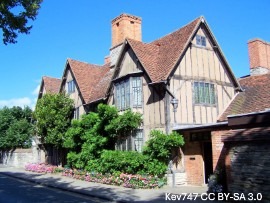
Stratford-upon-Avon home of Shakespeare's daughter is 'At Risk'
Lady Grange’s House repaired on St Kilda
.jpg)
National Trust for Scotland repairs stone cleit with link to famous island resident
Griff Rhys Jones on BBC Radio 4 Today programme
,_Green_Lane,_Derby.jpg)
The Victorian Society’s President unveiled its latest Top Ten Endangered Buildings 2026.
Need a MATE? Book your place now.
IHBC offers free webinars on applying for IHBC accreditation (Full & Associate).
UK Stained Glass Repository finds windows new homes
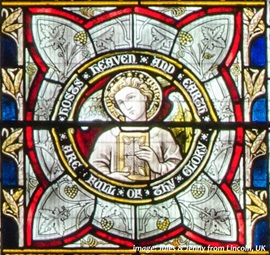
How are stained glass windows are rescued, stored and repurposed?
APPGEBE report sets high aims for quality
'Government must not sacrifice quality in drive to build 1.5m homes'
New measures protect Historic Shipwrecks from heritage crime

Underwater cultural heritage benefits from new HE guidance
How could the City of London skyline look in 6 years' time?

Visualisation shows approved planning applications as completed buildings
National Trust for Scotland calls for VAT cuts
Heritage neglect is encouraged by current policies
IHBC's 'Context' Issue 186 features Industrial Heritage
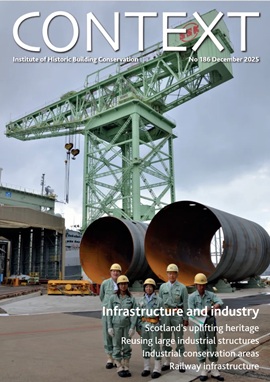
IHBC's members' journal reports on the challenges of conserving infrastructure
Book now for IHBC Annual School 2026

IHBC Annual School is taking place 18-20 June 2026 in Newcastle
RICHeS Research Infrastructure offers ‘Full Access Fund Call’
RICHeS offers a ‘Help’ webinar on 11 March
Latest IHBC Issue of Context features Roofing
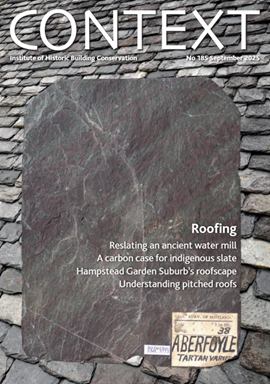
Articles range from slate to pitched roofs, and carbon impact to solar generation to roofscapes
Three reasons not to demolish Edinburgh’s Argyle House

Should 'Edinburgh's ugliest building' be saved?
IHBC’s 2025 Parliamentary Briefing...from Crafts in Crisis to Rubbish Retrofit
IHBC launches research-led ‘5 Commitments to Help Heritage Skills in Conservation’
How RDSAP 10.2 impacts EPC assessments in traditional buildings

Energy performance certificates (EPCs) tell us how energy efficient our buildings are, but the way these certificates are generated has changed.